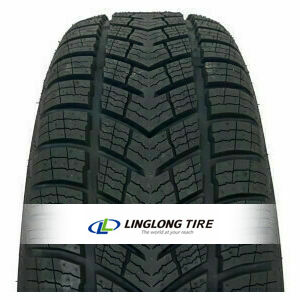
The Linglong Sport Master Winter is a winter touring tyre designed for passenger cars. Engineered to tackle winter conditions, it delivers effective traction on snow and ice. It offers medium rolling resistance, providing a good balance between fuel economy and performance, as well as high-level wet grip. Acoustic comfort has also been considered, ensuring a relatively quiet ride despite its winter tread pattern.
In order to review this product, you must have previously placed an order. We inform you that the reviews left on the site are subject to a control procedure. Reviews are sorted in chronological order only.
Excellent grip on snow and wet roads, not too noisy. Excellent value for money.
For now, for every recommendation.
About 1,000 km so far, including 400 km in snow, wet conditions and slush. Once, the rear end lost grip at a very low speed, but overall they performed very well on the trip in sub-zero temperatures (city and motorway) and in the snow.
Also tested on partially icy roads, excellent grip. The only downside is that the car uses more fuel. Would I buy them again? Absolutely yes.
Very fast and competitively priced. Recommended.
Unbeatable value for money.
The tyres are actually very good. They have excellent grip and are stable in corners. However, the noise at higher speeds bothers me. A constant noise occurs as soon as you drive at 130 km/h and above.
For the price, it’s the only 3PMSF tyre with an A rating for wet grip that truly behaves like an A in the wet: very predictable up to the limit of grip and, beyond that, it understeers in a forgiving way. Road noise is what you’d expect from a winter tyre. The downside is fuel consumption. By far, it’s the tyre that has increased my consumption the most (front axle). I rotated them, put the Wintercrafts I had fitted back on the front, and the average consumption dropped by 0.5/0.6. In snow, it’s on a par with any 3PMSF tyre. The second negative point is the lack of feedback. I don’t know whether it’s due to the tread blocks or the stiffness of the carcass, but it doesn’t communicate anything through the steering wheel, meaning that when driving hard through certain bends it’s more a matter of observing the consequences than reading the feedback. That said, once I moved them to the rear axle, everything was sorted.
I've only driven on them a little so far. Fuel consumption is slightly higher than with summer tyres. Rolling noise is good. The snow test is still pending.
I can't say anything yet about longevity, but we had them on a Seat Leon with 205/60 R16 tyres for two seasons, covering about 12,000 km, and we could have done another season.